Tree Pests & Diseases in Eastern CT
Keeping your trees healthy starts with knowing what can hurt them. Below are the pests and diseases we see most often here in Eastern Connecticut. Read through, see if anything looks familiar, and give us a call – we’re glad to take a look.
Emerald Ash Borer

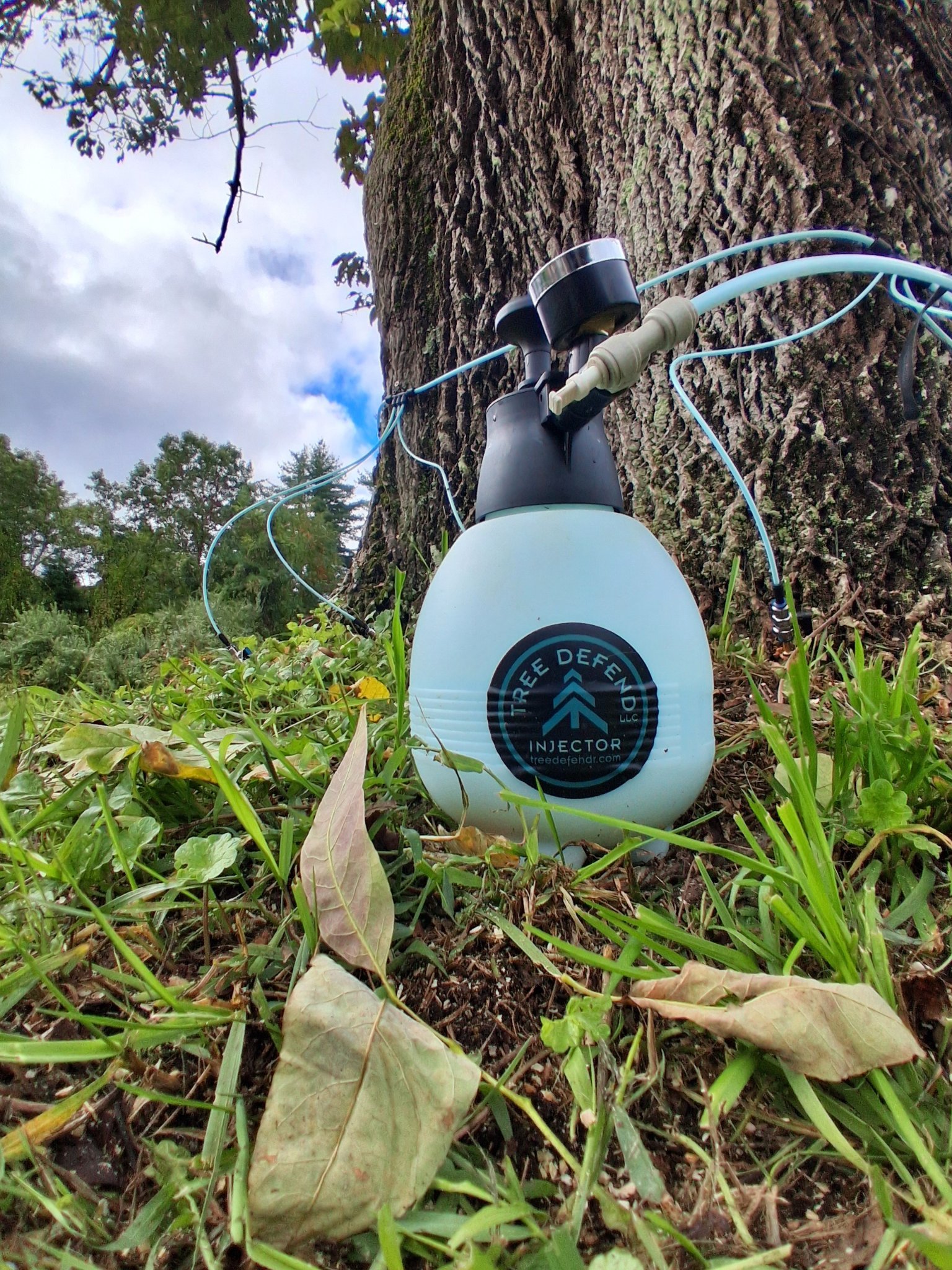
What it is: A small green beetle whose young tunnel under the bark of ash trees, cutting off the flow of water and nutrients. Green ash and white ash have both been hit hard across our area.
Signs to look for: A thinning crown, small D-shaped exit holes in the bark, water sprouts growing along the trunk, and extra woodpecker activity.
What we do about it: We inspect your ash trees and tell you straight whether they’re still treatable. For trees with a fighting chance, trunk injections can protect them and even save them when caught early enough. If you have a green ash, don’t wait – the sooner we take a look, the better the odds.
See the signs? Call 860-230-8260 for an inspection.
Hemlock Woolly Adelgid

What it is: A tiny aphid-like insect that feeds at the base of hemlock needles. It’s one of the biggest threats to hemlocks in Connecticut – and it can kill a hemlock very quickly if it’s not treated properly and early.
Signs to look for: White, woolly masses at the base of needles on the undersides of branches, needle loss, a thinning crown, and a gray-green cast to the foliage. Decline can be fast, so don’t wait and watch.
What we do about it: Proper treatment applied early is the key. We’re a licensed applicator, and we use systemic treatments that get to work where these insects feed. The earlier we catch an infestation, the better your hemlock’s chance – an untreated infested hemlock can die quickly. If you see the signs, call us right away.
Beech Leaf Disease

What it is: A disease of beech trees caused by a tiny leaf nematode. Infected leaves show dark banding between the veins, and heavy infections can kill young trees within a few years.
Signs to look for: Striped or banded leaves, curled leaves, buds that never open in spring, and a thinning crown.
What we do about it: We monitor your beech trees and focus on keeping them vigorous so they can fight back. After a diagnosis, we talk through the options — from cultural care to targeted treatments where they make sense.
Spongy Moth

What it is: A caterpillar that feeds on oak leaves — and plenty of other trees too. In a bad year, it can strip a tree bare.
Signs to look for: Thin or bare canopies in late spring and early summer, fuzzy caterpillars on the trunk, and tan egg masses on bark and outdoor surfaces.
What we do about it: With spongy moth, treatment timing matters. We time treatments to hit the caterpillars when they’re young and feeding, which is when they’re most vulnerable. If you’ve had defoliation before, let’s get ahead of it this season.
Spotted Lanternfly

What it is: A newer threat in Connecticut. This spotted, hopping insect feeds on the sap of many trees and plants, weakening them and leaving behind sticky honeydew.
Signs to look for: Spotted red-and-gray adults on trunks in late summer and fall, muddy-looking egg masses on bark, and sticky honeydew with black sooty mold underneath.
What we do about it: We watch for new arrivals, confirm what you’re seeing, and treat infested trees to knock the population down. If you think you’ve spotted one, give us a call – early action keeps it from spreading.
Armillaria Root Rot

What it is: A soil fungus that rots the roots and base of stressed trees. It’s very common here in Connecticut, showing up in oaks, maples, and plenty of other trees when they’re stressed by drought, injury, or poor soil.
Signs to look for: Clusters of honey-colored mushrooms at the base of the tree in the fall, white fan-shaped growth under the bark at the base, black shoestring-like strands on the roots, and a thinning crown with slow dieback.
What we do about it: Honest diagnosis comes first — there’s no cure once Armillaria is established. Where a tree is worth saving, we focus on keeping it vigorous with the right care. When an infected tree or stump threatens nearby healthy trees, we take it out.
See the signs? Call 860-230-8260 for an inspection.
Oak Wilt

What it is: A fungal disease that clogs an oak’s water-conducting tissue. It’s a deadly oak disease spreading through the Northeast — red oaks can die within weeks of showing symptoms. If you have oaks, it’s worth knowing the signs and calling early.
Signs to look for: Leaves wilting and browning from the edges inward in summer, rapid leaf drop, and a dark ring or streaking in the wood just under the bark.
What we do about it: Fast diagnosis, sanitation (never move infected oak firewood), and a plan to protect the healthy oaks around it.
See the signs? Call 860-230-8260 for an inspection.
Want a full picture of your tree’s health? Take a look at our Arborist Services, and see all the towns we serve.
Licensed CT Arborist #PMCS.0066329 · Pesticide licensed & certified through CT DEEP · Fully Insured